

Biography of Tom Haas
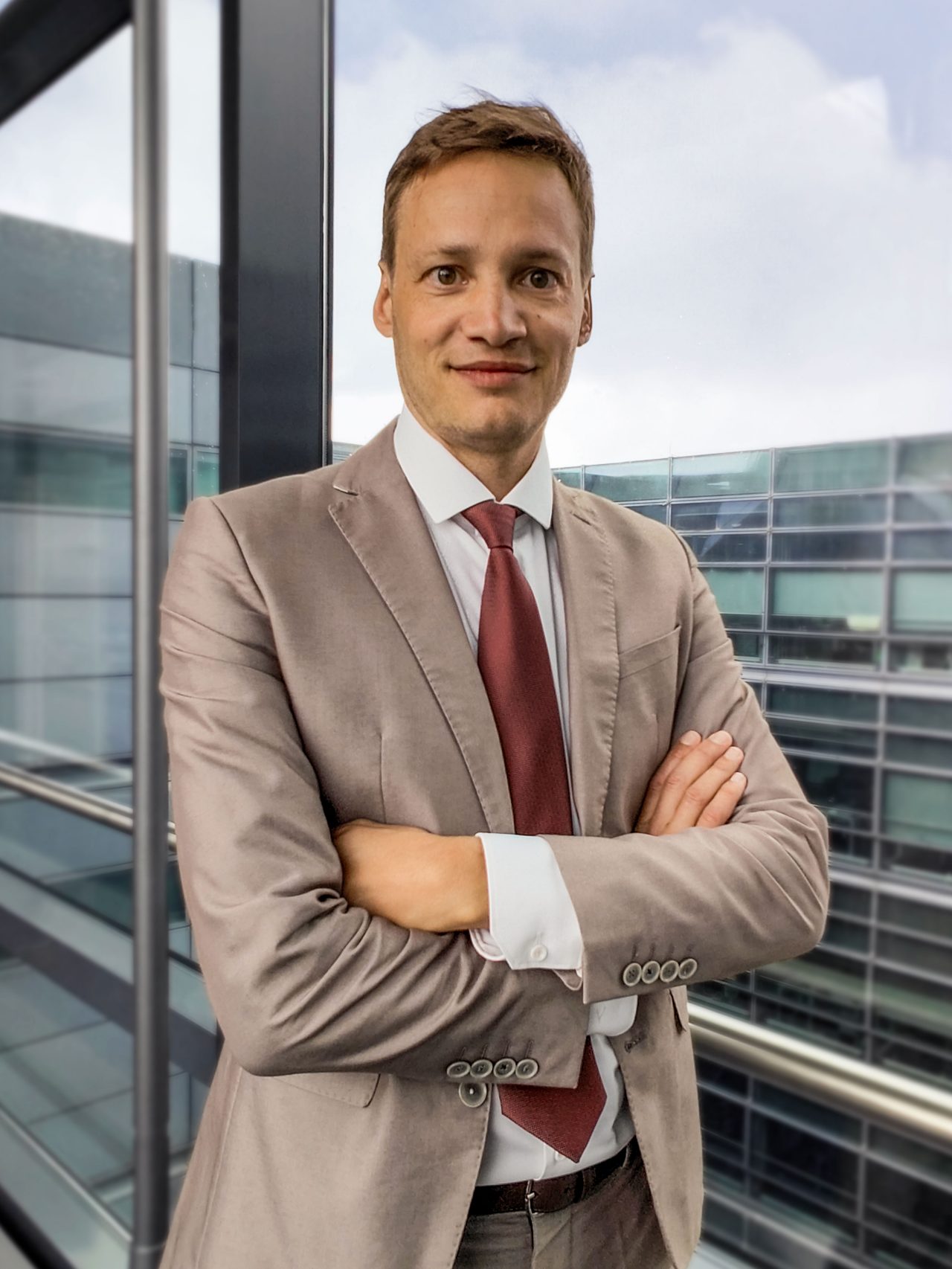
Tom Haas has been Director of STATEC, Luxembourg’s National Institute for Statistics and Economic Studies, since November 2024. He heads the institution responsible for producing official statistics, economic analyses, studies and economic forecasts that inform public and private decision-making in Luxembourg, whilst ensuring the scientific independence and neutrality of the country’s statistical work.
A recognised specialist in economic, social and environmental analysis, macroeconomic modelling and economic forecasts, Tom Haas has over fifteen years’ experience at STATEC. He began his career as a research officer in the ‘Studies, Forecasts and Research’ and subsequently the ‘Modelling and Forecasting’ units, where he contributed to the development of economic analyses and forecasting tools used to evaluate public policies and monitor the Luxembourg economy. In 2020, he was appointed Head of the ‘Modelling and Forecasting’ unit before taking over, in 2023, as Head of the ‘Economic Conditions, Modelling and Forecasting’ department and joining STATEC’s Executive Committee. In this capacity, he has represented the institution before numerous national and international bodies, notably in the context of the work of the Tripartite Commission and the Economic and Social Council, as well as before international organisations such as the European Commission, the OECD and the IMF.
Tom Haas holds a Master’s degree in Modelling and Econometrics from the University of Montpellier. He is also a graduate of the National School of Statistics and Economic Administration (ENSAE Paris), where he obtained a Diploma in Statistical Economics, and holds a Master’s degree in International Economics from the University of Paris 1 Panthéon-Sorbonne.
‘I'm honoured to be appointed Director of STATEC, and I'm looking forward to putting my professional experience and enthusiasm to work for an organisation that I know inside out. Over the last few years, I have seen STATEC's teams demonstrate their ability to adapt to a wide range of challenges. STATEC needs to be responsive, proactive and innovative to help citizens and decision-makers make informed choices,’ says Tom Haas.
Under his leadership, STATEC is continuing to develop its work towards a public statistics system that is more responsive, innovative and focused on making the most of data to serve citizens and decision-makers.
Transparency, professional independence and ancillary activities
In order to guarantee transparency and professional independence, STATEC publishes the current ancillary activities of its directors as well as a restrictive list of categories of activities compatible with the exercise of their functions. These activities are defined and regulated by Article 14 of the "Statut général des fonctionnaires de l’État" and must comply with the legal limits on working hours and all applicable obligations. They require ministerial authorisation and, where applicable, are subject to prior assessment by the various parties for risks of conflicts of interest. Under no circumstances may they compromise the impartiality of the directors or interfere with the performance of their official duties.
Tom Haas is a member of the Board of Directors of STATEC Research.
External activities in accordance with the European Statistics Code of Practice
The external activities of STATEC directors are compatible with professional independence and neutrality, as guaranteed by the European Statistics Code of Practice and the Law of 10 July 2011 on the organisation of the National Institute of Statistics and Economic Studies, provided that they fall within the categories defined below. In particular, they must comply with principles 1 (Professional independence), 4 (Commitment to quality), 5 (Statistical confidentiality) and 6 (Impartiality and objectivity) of the Code of Practice.
- Strengthening institutional and international cooperation
Participation in working groups, conferences and statistical councils strengthens statistical governance and promotes cooperation and coordination within the Luxembourg, European and international statistical systems.
- Promoting transparency and dialogue with users of statistics
Exchanges with stakeholders – public appearances, participation in forums or seminars, speaking engagements or authorship – contribute to strengthening transparency, data and statistics culture, and understanding of economic, social and environmental issues.
- Developing professional expertise without compromising independence
Ancillary academic, scientific or professional activities contribute to the development of directors' skills and expertise. Participation in advisory committees or boards of directors effectively promotes understanding of the country's economic and institutional environment, provided that these are strategic and non-executive functions and therefore do not involve any operational responsibility that could influence statistical production or the content of publications.
- Maintain links with scientific research and education.
Ancillary activities in the fields of research, teaching or scientific dissemination help to promote international standards and best practices. Such activities underscore the commitment and reinforce the credibility and expertise of directors acting as representatives of the statistical system.
- Preserve the impartiality, objectivity and clarity of statistical decisions
Statistical production is based on principles of objectivity, impartiality and professional independence, and must be free from external pressure. Ancillary activities must not involve taking political positions that could undermine the perceived neutrality of directors.
- Prevent conflicts of interest related to external responsibilities
Ancillary activities must not involve the exercise of a function that could conflict with the exclusive responsibility of directors for statistical decisions, particularly methodological ones. Participation in scientific or advisory bodies or non-executive boards of directors, in particular as a representative of the State or observer, remains possible provided that there is no conflict of interest.
Dernière modification le